

ERCP
ERCP vs. Surgery for Bile Duct Stones: Which One Do You Need?
Learn how bile duct stones are diagnosed (MRCP, EUS), when ERCP vs. surgery is needed, risks to watch for, and ERCP care in Rangpur.
· 6 min read
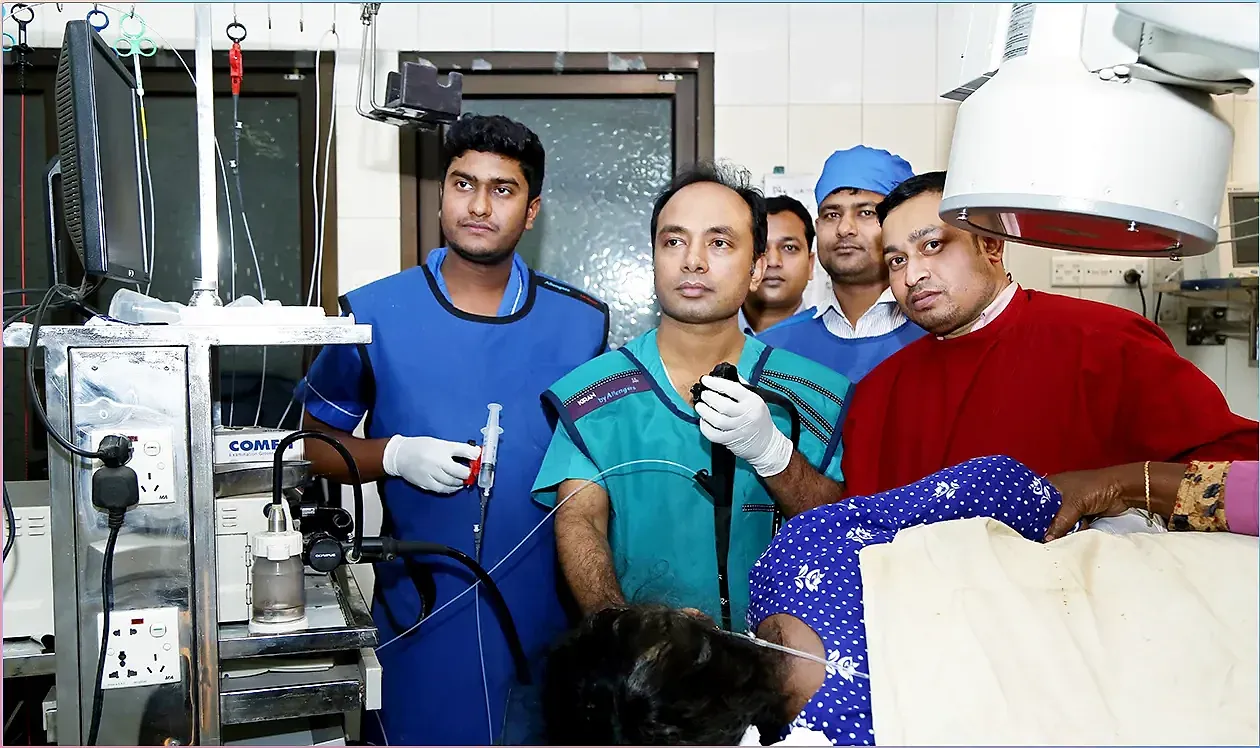
When an ultrasound or CT scan raises concern for a stone in the common bile duct (CBD), many patients and families immediately worry about major abdominal surgery. In modern hepatology and gastroenterology, confirmed bile duct stones can often be removed without a surgical incision using ERCP (Endoscopic Retrograde Cholangiopancreatography).
Understanding how bile duct stones are confirmed, when ERCP is indicated, and when surgery is still necessary helps you make safe, informed decisions with your specialist.
What is ERCP for bile duct stones?
The bile duct is a narrow tube that carries bile from the liver and gallbladder into the upper small intestine (duodenum). When a stone blocks this duct, bile cannot flow normally into the intestine. As a result, bilirubin levels rise in the blood and cause obstructive jaundice, upper abdominal pain, dark urine, and sometimes serious infection.
During ERCP, a trained therapeutic endoscopist passes a thin, flexible camera scope gently through the mouth, down the food pipe and stomach, to the opening of the bile duct. Using X-ray guidance (fluoroscopy) and specialized instruments passed through the scope, the doctor can widen the duct opening (sphincterotomy), remove the stone, and place a temporary stent if needed to maintain bile drainage.
Important distinction: ERCP removes stones from the bile duct, not the gallbladder itself. If gallbladder stones remain, additional treatment (such as gallbladder surgery) may be necessary to prevent future complications.
How are bile duct stones diagnosed before ERCP?
Because ERCP is primarily a therapeutic procedure with potential risks, doctors do not perform it merely as a routine diagnostic test. Standard abdominal ultrasound is useful as a first step, but it does not always clearly visualize stones inside the common bile duct.
Depending on your symptoms, ultrasound findings, and liver function tests (LFTs), your specialist may recommend confirmatory imaging before deciding on ERCP:
- Ultrasound & CT scan: Ultrasound is often the initial imaging test, while a CT scan may help identify related abnormalities and complications.
- MRCP (Magnetic Resonance Cholangiopancreatography): A specialized, non-invasive MRI scan that gives a detailed map of the bile ducts and pancreas without radiation or instruments inside the body.
- Endoscopic Ultrasound (EUS): A highly sensitive ultrasound performed via an endoscope from inside the stomach/duodenum, often used when suspicion is intermediate to detect small bile duct stones.
Patients with a confirmed bile duct stone on imaging or other high-risk features may proceed directly to therapeutic ERCP. Those with an intermediate likelihood of bile duct stones may benefit from MRCP or EUS before an invasive procedure is considered.
ERCP vs. Surgery: Key Differences at a Glance
| Feature | ERCP | Surgery (usually laparoscopic; open surgery in selected cases) |
|---|---|---|
| Skin incision | None — done through the mouth | Keyhole cuts or abdominal incision |
| Primary purpose | Clears stones/blockage from the bile duct | Removes gallbladder; explores bile duct if needed |
| Typical procedure time | Often around 30–60 minutes | Often around 1–2+ hours |
| Typical hospital stay | Often same day or 1–2 days | Often 2–5 days (longer for open surgery) |
| Typical recovery | Often 1–3 days for light activities | Laparoscopic: often 1–2 weeks for many daily activities; Open surgery: often several weeks |
When is ERCP preferred—and when is surgery needed?
According to international guidelines, including those from the American Society for Gastrointestinal Endoscopy (ASGE)(opens in a new tab) and the European Society of Gastrointestinal Endoscopy (ESGE)(opens in a new tab), ERCP is an established treatment for confirmed common bile duct stones, particularly when they cause biliary obstruction or cholangitis (bile duct infection). In patients with gallstone pancreatitis, ERCP is recommended when there is accompanying cholangitis or persistent biliary obstruction, but it is not routinely required in every case.
In practice, ERCP and surgery often complement each other:
- Bile duct stone only (gallbladder already removed): When the gallbladder has already been removed and a stone develops in the common bile duct, ERCP is often sufficient to remove the stone without additional surgery.
- Stones in both the gallbladder and common bile duct: ERCP is often performed first to clear the bile duct. Once the patient is medically suitable, laparoscopic gallbladder removal is generally recommended during the same hospital admission or soon afterward (ESGE guidelines suggest within two weeks when clinically appropriate) to reduce the risk of recurrent gallstone-related complications.
- Very large or impacted stones, or altered stomach anatomy: If stones cannot be cleared with standard ERCP or prior surgery altered the digestive tract, specialized endoscopic methods or surgical bile duct exploration may be required.
Is ERCP painful, and what are the risks?
ERCP is usually performed under sedation or anesthesia to minimize discomfort during the procedure. The type of sedation or anesthesia depends on the patient’s condition and the medical team’s assessment, and patients are monitored throughout. You will need to fast beforehand and share a full list of your medicines—especially blood thinners or diabetes medications—just as when preparing for an endoscopy.
Like any medical procedure, ERCP carries certain risks. According to patient guidance from the NIDDK (National Institute of Diabetes and Digestive and Kidney Diseases)(opens in a new tab), these may include pancreatitis (inflammation of the pancreas), bleeding, infection of the bile ducts, perforation of the digestive tract, and reactions to sedation or anesthesia. Although most patients undergo ERCP without serious complications, individual risks depend on your health condition and the complexity of the procedure. The medical team monitors patients after the procedure for possible complications.
ERCP Care in Rangpur and Northern Bangladesh
Previously, patients from Rangpur, Dinajpur, Thakurgaon, Kurigram, and nearby districts had to travel to Dhaka for ERCP. Since 2018, Dr. Zia Hayder Bosunia and his dedicated endoscopy team have performed over 1,500 ERCP procedures in the Rangpur region, bringing specialized minimally invasive bile duct care closer to home.
If you have been advised to undergo ERCP or have scans showing possible bile duct stones, you can book an evaluation at our Rangpur or Thakurgaon consultation chambers. Please bring your ultrasound/MRCP/CT reports, liver function tests, and current prescriptions.
Frequently Asked Questions
- Does ERCP remove the gallbladder too? No. ERCP removes stones from the bile duct, not the gallbladder itself. If stones remain in the gallbladder, your doctor and surgeon will discuss timely gallbladder surgery to prevent future episodes.
- If a plastic stent is placed during ERCP, is it permanent? No. Plastic bile duct stents are generally temporary. They must be removed or replaced according to a planned schedule determined by the treating specialist. The timing varies depending on the reason for stent placement and the patient’s condition. Patients should never miss their scheduled follow-up.
- What reports should I bring to the consultation? Bring your abdominal ultrasound, MRCP/CT scan, bilirubin and liver function tests (LFTs), complete blood count (CBC), coagulation profile (PT/INR), and a list of all current medicines.
Need a consultation? Call a chamber to book.
See chambers